The habit of using devices before bed is particularly harmful to children.
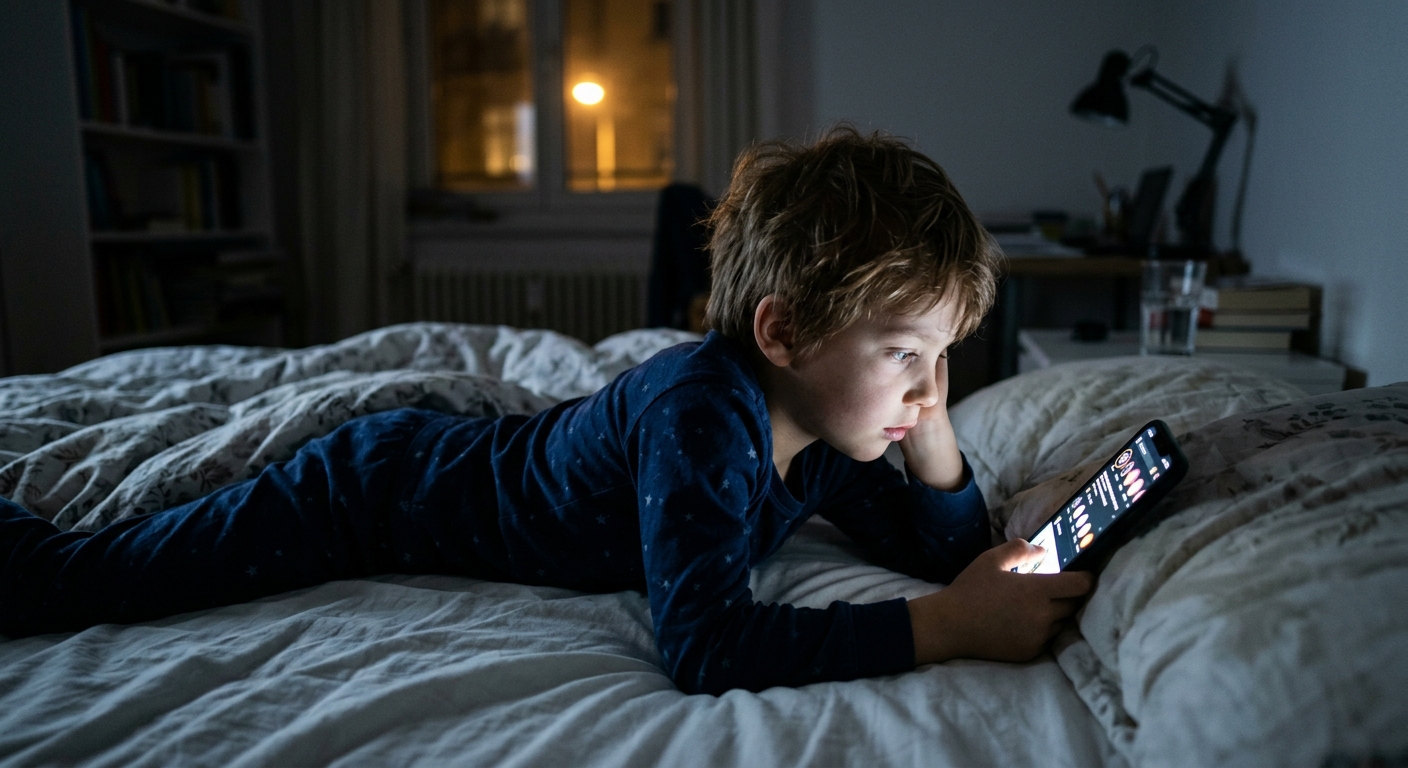
Experts from the Lviv Regional Center for Disease Control and Prevention explained that the blue light emitted from electronic devices screens suppresses the production of melatonin, a sleep hormone, leading to sleep disturbances, fatigue, and anxiety. This is particularly harmful for children, as their nervous systems are still developing.
The habit of using devices before bed has a negative impact on the body, especially on children. According to experts at the Lviv Regional Center for Disease Control and Prevention, the screens of phones, tablets, and laptops emit blue light, which suppresses the production of melatonin, the main sleep hormone.
In natural conditions, the level of melatonin increases in the dark, promoting sleep, and decreases in the light when the body wakes up. However, if a person actively uses devices in bed, the brain perceives this as a signal to start the day, which makes it difficult to fall asleep and results in shallow and restless sleep.
In addition to the physiological effects of light, the information a person receives from devices before bed further stimulates the nervous system. Even 30–60 minutes of phone use before bed can shift the peak of melatonin production by 1–2 hours.
Experts recommend removing screens at least 60–90 minutes before bedtime, enabling "night mode" on devices, switching to a paper book, or listening to calming music. The impact of devices on the brains of children and teenagers is particularly harmful, as their nervous systems are still developing, which can lead to attention deficit disorder, hyperactivity, concentration problems, anxiety, and chronic insomnia.